Drezno
Informacje, które mogą być przydatne dla Twojej podróży.
Zdjęcia Drezno
Zdjęcia Drezno w Panoramio
|
Porady podróży i ostrzeżenia Drezno
| |||||||||||||||||||||||||||||||||||||||||||||||||||||||||||||||||||||||||||||||||

Drezno, NiemcyPoniedziałek 20, Lipiec |
|
Z wikipedii o Drezno
Plik:TyDresden20050921i0636. jpg|900pxpoly 0 495 1359 399 1429 412 1768 390 1972 395 1440 463 1184 537 0 537 Łaba
poly 0 374 1055 349 1340 340 1344 362 742 377 457 413 0 427 Tarasy Brühla
poly 308 232 485 237 473 176 416 132 409 56 394 24 374 71 372 131 342 177 317 179 Kościół NMP
poly 255 126 308 233 538 257 576 215 626 259 662 259 706 227 727 231 756 248 756 340 50 357 49 242 134 188 205 239 255 184 Wyższa Szkoła Sztuk Pięknych
poly 195 234 207 166 213 206 200 238 Kościół Św. Krzyża
poly 914 344 916 288 1098 289 1113 303 1110 339 Gmach sekundogenitura
poly 954 281 1103 284 1115 299 1116 332 1277 326 1273 284 1244 258 1237 197 1225 173 1208 210 1203 255 974 260 Gmach Sądu Landu w Dreźnie
poly 1250 260 1262 234 1280 271 1270 277 Brama Jerzego
poly 1283 316 1279 273 1287 272 1290 196 1307 90 1328 198 1334 274 1348 275 1338 319 Zamek
poly 1348 353 1348 293 1390 287 1389 238 1414 227 1414 197 1434 97 1476 287 1509 295 1509 339 1394 346 Kościół Dworski
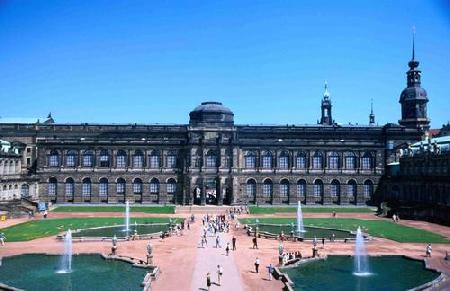
poly 1513 339 1514 298 1528 294 1539 285 1531 278 1553 278 1570 292 1674 292 1695 299 1694 314 1680 330 Zwinger
poly 1686 331 1719 306 1755 307 1784 326 Italienisches Dörfchen
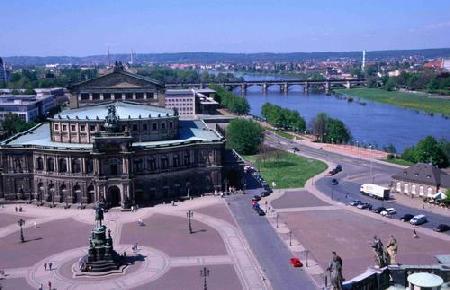
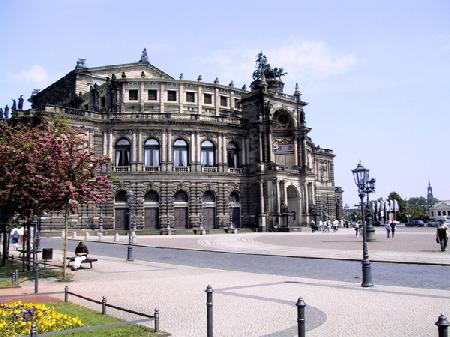
poly 1728 291 1739 274 1751 284 1810 265 1828 248 1894 249 1914 262 1914 287 1954 292 1954 310 1910 324 1790 324 1754 302 Semperoper
poly 1470 351 1770 334 2036 331 2036 395 1632 378 1472 366 Most Augusta
poly 1268 538 1700 448 2036 403 2036 538 Elbwiesen
Panorama historycznego centrum miasta(Niektóre obiekty są opisane w oddzielnych artykułach. Należy kliknąć myszą w wybrany obiekt)
Drezno (niem. Dresden, górnołuż. Drježdźany, czes. Drážďany, dawniej Drezdno - stąd przymiotnik drezdeński) – miasto we wschodnich Niemczech na Pogórzu Zachodniosudeckim, położone nad Łabą, stolica kraju związkowego Saksonia oraz okręgu administracyjnego Drezno (dawniej Rejencji Drezdeńskiej). Jego nazwa pochodzi od starołużyckiego Drežďany, oznaczającego "mieszkańcy mokradeł". Aglomeracja drezdeńska liczy ok. 1, 036 mln mieszkańców (2004).
W 1987 miasto miało 519, 8 tys. mieszkańców. Spadek liczby ludności wynika między innymi ze znacznej migracji do krajów związkowych na zachodzie kraju.
Drezno stanowi duży węzeł komunikacyjny (lotnisko międzynarodowe), z ośrodkami przemysłu maszynowego, produkcji klisz fotograficznych, przemysłu chemicznego i farmaceutycznego. Miasto jest ośrodkiem turystycznym, zwanym "miastem baroku", znajduje się tu wiele zabytków i muzeów, słynna jest Galeria Obrazów (Gemäldegalerie Alte Meister). Znajduje się tu również fabryka samochodów Volkswagen.