Nizhny Novogorod is divided by the Oka River into two distinct parts. The Upper City (Russian: Нагорная часть, Nagornaya Chast) is located on the hilly eastern (right) bank of the Oka. It includes three of the eight city districts into which the city is administratively divided:
- Nizhegorodsky (the historical and administrative center of the city); Prioksky; Sovetsky.
The Lower City (Russian: Заречная часть, Zarechnaya Chast) occupies the low (western) side of the Oka, and includes five city districts:
- Kanavinsky (the site of the Nizhny Novgorod Fair and the location of the main train station); Moskovsky (home of the Sokol Aircraft Plant and its airfield); Sormovsky (where Krasnoye Sormovo and the Volga Shipyard are located); Avtozavodsky (built around the GAZ automotive plants); Leninsky.
All of the today's lower city was annexed to Nizhny Novgorod in 1929-1931.
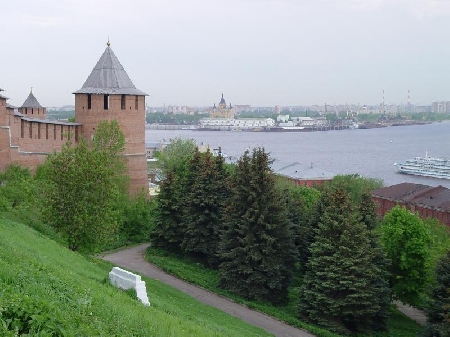
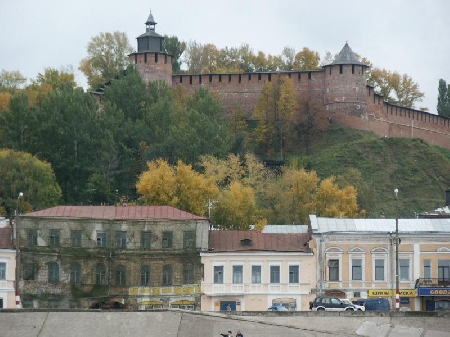
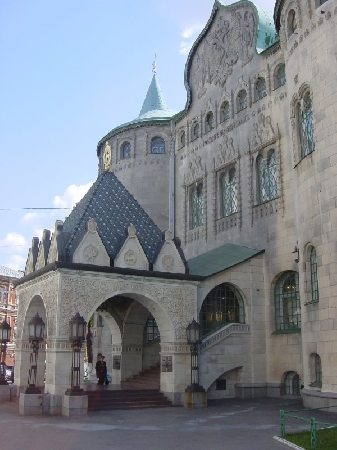
Much of the city downtown is built in the Russian Revival and Stalin Empire styles. The dominating feature of the city skyline is the grand Kremlin (1500-11), with its red-brick towers. After Bolshevik devastation, the only ancient edifice left within the kremlin walls is the tent-like Archangel Cathedral (1624-31), first built in stone in the 13th century.
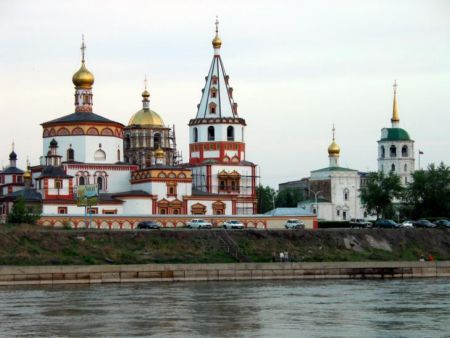
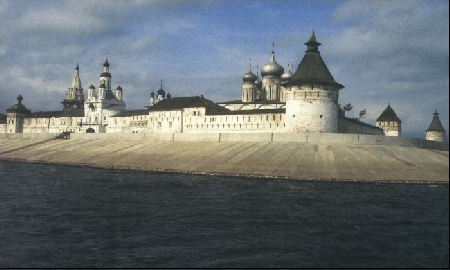
Other notable landmarks are the two great medieval abbeys. The Monastery of the Caves features the austere five-domed cathedral (1632) and two rare churches surmounted by tent roofs, dating from the 1640s. The Annunciation monastery, likewise surrounded by strong walls, has another five-domed cathedral (1649) and the Assumption church (1678). The only private house preserved from that epoch formerly belonged to the merchant Pushnikov.
Nizhny Novgorod is one of the biggest historic, cultural and scientific centers of Russia.
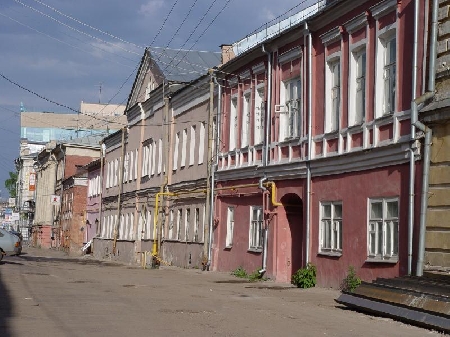
There are more than 600 unique historic, architectural and cultural monuments in the city; that gave grounds to UNESCO to include Nizhny Novgorod in the list of 100 cities of the world which are of great historical and cultural value.
There are about 200 culture and art institutions of regional and municipal subordination in Nizhny Novgorod.
Para el escritor ruso cuyo apellido dio el nombre anterior a esta ciudad, véase Máximo Gorki.
Nizhni Nóvgorod (en ruso Нижний Новгород, 'Villanueva de Abajo') es una ciudad en la parte europea de la Federación Rusa que, según el censo de la población de 2010, cuenta con 1, 25 millones de habitantes. Representa la quinta mayor ciudad de la Federación Rusa, después de Moscú, San Petersburgo, Novosibirsk y Ekaterimburgo, y la tercera de su parte europea. Es el centro económico y cultural de la región del Volga-Vyatka, así como el centro administrativo de la óblast de Nizhni Nóvgorod y del Distrito Federal del Volga. De 1932 a 1990 la ciudad llevó el nombre de Gorki (Горький) en honor del escritor Máximo Gorki nacido en la ciudad.
La ciudad estuvo cerrada al turismo durante gran parte de la era soviética, hasta principios de los años 1990. Tiene un centro antiguo muy bonito y bien conservado, con muchos monumentos históricos, arquitectónicos y culturales únicos que han hecho que la UNESCO incluya Nizhni Nóvgorod en la lista de las 100 ciudades del mundo que representan el valor histórico y cultural del mundo.
Description above from the Wikipedia, licensed under CC-BY-SA full list of contributors
here.